Chameleon Astronaut Illustrations: A Cosmic Journey
There’s something inherently delightful about a chameleon. It’s a creature built on adaptation, a master of blending in or standing out as needed. Now, take that core concept and launch it into the vast, star-dusted canvas of outer space. That’s the central idea behind these Chameleon Astronaut Illustrations—a fusion of playful biology and epic cosmic adventure. They aren’t just drawings of reptiles in spacesuits; they are tiny narratives frozen in time, each one poised at the edge of a galactic discovery.
The Visual Language of Intergalactic Chameleons
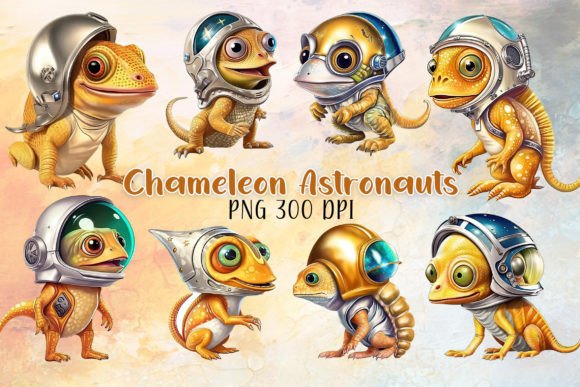
At first glance, the appeal is immediate. The illustrations strike a unique balance between whimsy and wonder. The chameleons themselves are rendered with a friendly, almost cartoonish personality, their expressive eyes peering out from beneath glass helmet visors. This approachability is key. It makes the subject matter accessible and engaging, whether it’s for a child’s bedroom wall or a tech startup’s quirky brand mascot. The style avoids being overly childish, leaning instead into a modern, vector-like cleanliness that feels professional and polished.
The true magic, however, lies in the cosmic context. Each design places the chameleon astronaut in a different stellar scenario—perched on a crescent moon, gripping the rings of Saturn, or floating serenely past a nebula. The color palettes are rich and deep, drawing from the real hues of space: inky blues, vibrant purples, and fiery oranges, often punctuated by the bright, singular color of the chameleon itself. This contrast is a powerful visual tool. The creature becomes a focal point, a point of connection in an otherwise immense and abstract environment. It’s a clever visual metaphor for exploration, curiosity, and the courage to venture into the unknown.
Where These Illustrations Truly Shine
The versatility of a well-crafted illustration set is what transforms it from a nice-to-have into a staple in a creative professional’s toolkit. These Chameleon Astronaut Illustrations are a prime example. Their strength lies in their ability to inject personality and a sense of narrative into a wide array of projects without overwhelming the core message.
For brand identity and logo design, they offer a unique starting point. A children’s educational app about science, a space-themed café, or a creative agency wanting to project a playful yet ambitious image could adapt a single chameleon into a memorable mark. In packaging design, imagine these little explorers scattered across a box of gourmet coffee beans (“A Galactic Blend”) or used to decorate a line of artisanal hot sauces. They instantly tell a story and create shelf appeal.
Digital applications are perhaps the most obvious fit. Social media graphics come alive with these characters. They can be used as consistent mascots in Instagram stories, as engaging visuals for a blog post about innovation, or as fun, shareable stickers. For web design, a chameleon astronaut could serve as a custom loading icon, a delightful 404-page guide, or an illustrated element in a header that breaks the monotony of standard stock imagery. Content creators and bloggers in the tech, education, or lifestyle space will find them invaluable for adding a layer of visual interest that stock photos simply cannot provide.
Practical Guidance for Creative Projects
Adopting a new set of design assets requires a bit of strategic thinking. The first step is to evaluate the project’s tone. These illustrations excel in contexts that value imagination, curiosity, and a touch of whimsy. They might not be the right fit for a solemn legal firm’s annual report, but they would be perfect for a forward-thinking tech company’s internal newsletter.
Next, consider the technical specifications. The set includes 11 high-resolution PNG files at 300 DPI with transparent backgrounds. This is the standard for high-quality print and digital work. The transparent background is particularly crucial, allowing for seamless integration onto any colored surface or pattern. As these are PNGs, they are compatible with virtually any design software, from Adobe Photoshop and Illustrator to Canva and Procreate, making them accessible to hobbyists and professionals alike.
A critical consideration for any commercial project is licensing. Always review the terms provided with your purchase. These illustrations are marketed for both personal and commercial use, which is a significant advantage. However, understanding the specifics—like restrictions on resale of the raw files or use in print-on-demand services where the illustration is the primary product—is essential for professional integrity. For editorial design, such as a magazine feature on space tourism or a children’s book about constellations, these illustrations provide a ready-made visual narrative that can be adapted across multiple pages and layouts, ensuring visual consistency throughout the publication.
Finally, think about integration. A common mistake is to use such distinctive illustrations in isolation. The key to professional implementation is pairing. If you’re using a chameleon astronaut as a hero image, choose a clean, sans serif font for your body copy to maintain readability and let the illustration stand out. For a headline, a more playful display font could complement the character’s personality. The goal is to create a harmonious visual ecosystem where the illustration enhances, rather than competes with, your typography and overall layout. By treating these assets as characters in your visual story, you can unlock their full potential to captivate your audience and make your projects truly memorable.