Fruit Characters | Food Illustrations: A Fresh Take on Playful Design Assets
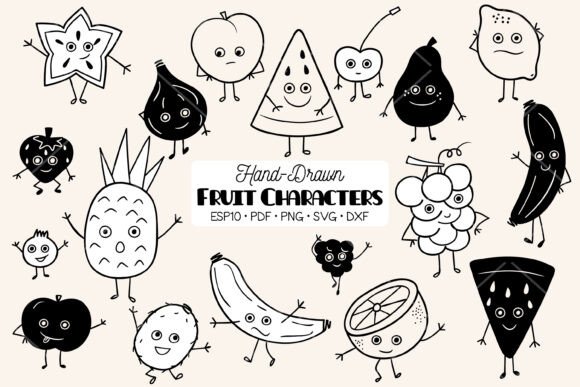
When your project needs a dose of personality that feels both approachable and instantly recognizable, character-driven illustrations often outperform abstract graphics. The Fruit Characters | Food Illustrations collection delivers exactly that—a set of hand-drawn, kawaii-style fruit cartoon characters that bring warmth and humor to any creative work. These aren't your grandmother's botanical prints. We're talking about a smiling banana with googly eyes, a mischievous apple, and a pineapple with enough charm to anchor an entire brand identity. The visual style leans into bold outlines, expressive faces, and that unmistakable doodle energy that makes people smile before they even process what they're looking at.
Understanding the Visual Language of Kawaii Fruit Illustrations
What makes these illustrations work so well across different applications? It comes down to a few deliberate design choices. The characters are rendered with clean, confident linework—thick enough to hold up at small sizes but detailed enough to feel hand-crafted. Each fruit has its own personality baked into the expression and posture, which means you're not just getting a banana; you're getting a banana with attitude. That distinction matters when you're building brand identity or designing social media graphics where first impressions happen in milliseconds.
The collection includes 18 unique characters presented in three distinct formats: black outline, black silhouette, and black & white. This variety gives you real flexibility. The outline versions work beautifully for coloring pages, stickers, and any project where you want to introduce custom color palettes. The silhouettes are perfect for packaging design, watermarks, and situations where you need a bold, simplified shape. The black & white versions sit somewhere in between, offering enough detail for editorial design while maintaining the versatility of monochrome.
Where These Design Assets Truly Shine
Let's talk practical applications, because that's where the real value lives. If you run an Etsy shop selling handmade goods, these illustrations translate directly into die-cut stickers, vinyl decals, and iron-on transfers. The SVG and DXF files are specifically formatted for cutting machines like Cricut and Silhouette, which eliminates the conversion headaches that plague so many crafters working with generic clip art. You load the file, set your cut lines, and go.
For small business owners in the food industry—juice bars, smoothie shops, organic grocers, farmers market vendors—these characters offer an affordable alternative to commissioning custom illustration work. Use them on menu boards, loyalty cards, social media posts, and branded packaging. The playful aesthetic communicates freshness, health, and approachability without feeling childish. There's a reason why brands like Mailchimp and Dropbox have leaned into illustrated characters: they humanize a business and make it memorable.
Content creators and bloggers will find these illustrations particularly useful for breaking up text-heavy layouts. A small kiwi character peeking from a sidebar or a row of fruit doodles serving as section dividers adds visual interest without cluttering the page. Because the files come in PNG format at 300 DPI with transparent backgrounds, dropping them into any design software or website builder requires zero technical skill.
Working With the Complete File Package
The collection ships with 54 PNG files, 54 SVG files, 36 DXF files, 3 EPS files, and 3 PDF files, plus index files to help you stay organized. Here's what that means in practice:
- PNG files give you ready-to-use raster images with transparent backgrounds—ideal for web design, presentations, and quick mockups.
- SVG files are scalable vectors that maintain crisp edges at any size, making them essential for logo design, large-format printing, and responsive web layouts.
- DXF files serve the crafting community directly, providing clean cut paths for CNC machines and laser cutters beyond just paper die-cutting.
- EPS and PDF files offer full editability in professional design software like Adobe Illustrator, giving designers complete control over stroke weights, colors, and composition.
This range of formats means you're not locked into a single workflow. Start a project in Canva using the PNGs, then move to Illustrator for a polished client deliverable using the EPS files—all from the same asset bundle.
Choosing the Right Illustration for Your Project
Not every character will suit every context, and recognizing that distinction will strengthen your final output. The more expressive characters—the wide-eyed melon, the grinning pineapple—work best in casual, fun environments: children's party invitations, birthday stickers, playful web design elements, and youth-oriented social media graphics. The subtler characters, with their simpler expressions, fit more refined applications like wellness brand collateral, recipe blog headers, and editorial design for food magazines.
When pairing these illustrations with typography, consider the visual weight. Because the characters have bold outlines and occupy a fair amount of visual space, they pair well with clean sans serif fonts for body text and confident display fonts for headlines. Avoid overly ornate script fonts or heavily textured handwritten fonts in close proximity—the competing organic textures can muddy your layout. A strong font pairing strategy creates contrast between the playful illustration style and more structured type, which keeps your design feeling intentional rather than chaotic.
Practical Tips for Professional Results
A few observations from working with character-based design assets at scale:
- Test at multiple sizes before committing. A character that looks charming at 200 pixels wide might lose detail or feel overwhelming at 50 pixels. Check your PNGs at the actual display size you'll use.
- Maintain consistent style across a project. Mixing these kawaii fruits with photorealistic food imagery or minimalist geometric graphics creates visual dissonance. Pick one direction and stay with it.
- Respect commercial licensing. This bundle is designed for both personal and commercial use, but always verify the specific license terms before using characters in products you sell or client deliverables you distribute.
- Use the silhouettes strategically. They're not just simplified versions—they're powerful tools for creating patterns, backgrounds, and subtle branding elements that don't compete with your primary content.
- Layer thoughtfully. Because the PNGs have transparent backgrounds, you can composite multiple characters into scenes or arrangements. Just watch your spacing and alignment so the composition feels balanced.
The real strength of Fruit Characters | Food Illustrations lies in its specificity. These aren't generic vector shapes masquerading as character art. Each illustration carries genuine personality, and that authenticity translates into stronger audience engagement. Whether you're a designer building out a client's brand identity, a crafter launching a new product line, or a marketer looking for visuals that actually stop the scroll, this collection provides the kind of premium font-adjacent asset that bridges the gap between amateur clip art and commissioned illustration work—without the commissioned illustration price tag.